If you’re remodeling a home in Anchorage—or building new—your drywall finish level will quietly determine whether your walls look “pretty good” or perfect under Alaska’s long winter lighting and modern LED can lights. The catch is that many homeowners are quoted “Level 4” or “Level 5” without a clear explanation of what those terms mean, where each level makes sense, and why the price difference can be significant.
This guide breaks down Level 4 vs Level 5 drywall finishing using the same language referenced in industry standards (GA-214 and ASTM C840), with a practical, Alaska-specific lens so you can choose the right finish for your home and your budget.
Quick takeaway:
Level 4 is the common “paint-ready” finish for most walls and ceilings.
Level 5 adds a full skim coat for the most uniform look—especially under critical lighting, dark paint colors, or smooth wall designs.
What Are Drywall Finish Levels?
Drywall finish levels are a standardized way to describe how drywall joints, fasteners, and surfaces are taped and finished before paint or texture. The goal is to align expectations between homeowners, builders, and finishers so everyone agrees on what “done” looks like.
The most commonly referenced guideline is the Gypsum Association’s GA-214 (Recommended Levels of Finish), and installation/finishing practices are also covered by standards like ASTM C840.
Anchorage tip: If your project is permitted, keep documentation clean and contractor info current. It helps avoid delays if the Municipality requests details during inspections.
Level 4 Drywall Finish: The “Standard Paint-Ready” Choice
What Level 4 includes
A Level 4 finish typically means:
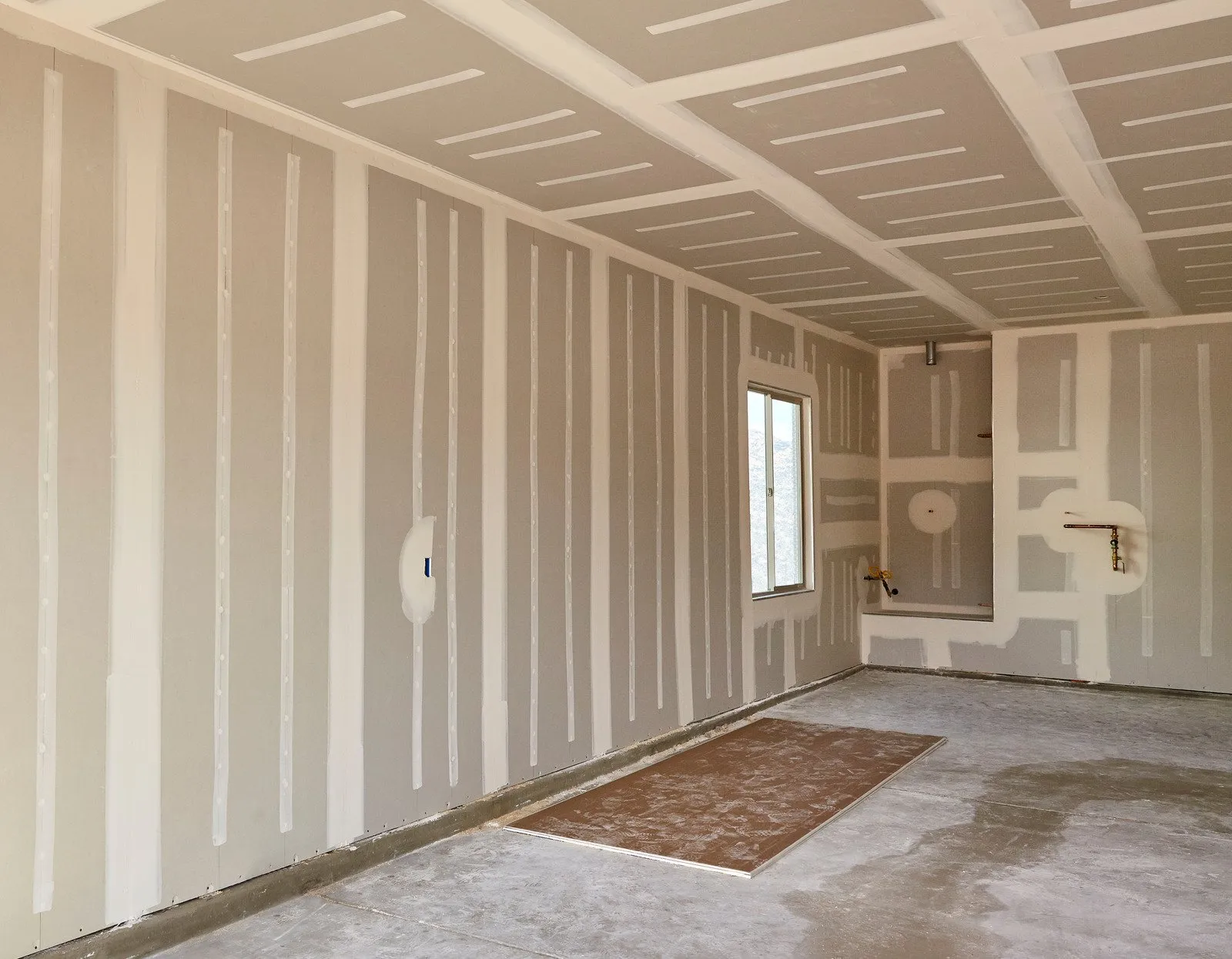
- Tape embedded in joint compound on all joints and interior angles
- Two additional coats of compound over joints
- Three coats over fastener heads and accessories
- Sanding/smoothing so surfaces are reasonably uniform for paint
This finish is widely used in residential interiors and is considered the standard for flat or low-sheen paint and/or light texture.
Where Level 4 works best in Anchorage homes
Level 4 is usually a great fit for:
- Bedrooms, family rooms, hallways
- Spaces where you’ll use flat or matte paint
- Walls receiving light texture (orange peel, knockdown)
- Areas without harsh “critical lighting” across the wall
Level 4’s biggest limitation: “photographing”
Level 4 can show:
- Joint bands
- Fastener “flashing”
- Subtle waves
This is most noticeable when:
- You use eggshell, satin, semi-gloss
- You choose dark, rich paint colors
- You have long LED strips, can lights, or windows that rake light across the wall
In those conditions, Level 4 can look “good,” but not “gallery smooth.”
Level 5 Drywall Finish: The “Uniform Smooth Wall” Upgrade
What Level 5 adds
A Level 5 finish includes everything in Level 4 plus:
- A skim coat of joint compound (or specialty surfacing) applied over the entire surface to create a more uniform substrate
Industry guidance notes Level 5 is commonly specified where smooth walls will receive non-flat paints, glossy finishes, dark/deep tones, or where critical lighting is expected.
USG and other manufacturers also describe Level 5 + appropriate paint systems as the most effective way to minimize joint photographing and improve uniform appearance.
Where Level 5 shines (especially in Alaska)
Level 5 is worth it for:
- Large smooth walls in open-concept living spaces
- Tall entry walls and stairwells
- Homes with lots of windows (raking light)
- Modern LED lighting layouts
- Dark paints (navy, charcoal, deep green, black accents)
- Satin/eggshell finishes where you want a premium look
If you’ve ever seen a wall that looks perfect at night but shows every seam in daylight—Level 5 is designed to reduce that.
Why Level 5 Costs More Than Level 4
Level 5 is more expensive for three main reasons:
- Labor and time
A full skim coat is a lot of surface area. It requires more application time, more drying cycles, and usually more sanding refinement. - Skill requirement
To get Level 5 right, you need consistent technique across the entire field—especially where Alaska humidity changes and jobsite temperatures can affect drying. - Surface prep and system approach
True Level 5 isn’t “just more mud.” It’s a system: uniform surface + the right primer/paint approach to reduce flashing. Standards commonly recommend priming before final decoration to help achieve the intended look.
Anchorage-Specific Considerations: Permits, Contractors, and Quality Control
If you’re doing a major remodel or addition, it’s smart to know how Anchorage handles permits and inspections. The Municipality of Anchorage provides guidance on permits and inspections, and you can also look up permit/inspection info through their systems.
For contractors working in Anchorage, the Municipality also outlines contractor licensing expectations.
State-level contractor licensing resources are available through Alaska’s Department of Commerce, Community, and Economic Development.
If you want to see what’s trending in local building/remodeling, the Anchorage Home Builders Association (AHBA) is another reputable resource.
Which Finish Level Should You Choose?
Choose Level 4 if:
- You’ll use flat/matte paint
- You’re okay with “great from normal distance”
- You’re adding light texture
- Your lighting is soft or diffused
- You want strong value for typical residential walls
Choose Level 5 if:
- You want smooth walls with a premium look
- You plan on eggshell/satin or darker colors
- Your home has critical lighting
- You hate seeing seams, flashing, or fastener patterns
- You want a finish that holds up visually over time
If you’re undecided, a common compromise is Level 5 in the main living areas (open concept, tall walls, big windows) and Level 4 in bedrooms and secondary spaces.
How Paint and Primer Affect Level 4 vs Level 5 Results
This is where many projects go wrong: people pay for better drywall finishing, then choose a paint/primer combo that increases flashing.
Best practices for a clean final look:
- Use a quality drywall primer/sealer before topcoat
- Avoid “paint-and-primer-in-one” shortcuts for new drywall in high-appearance areas
- Match paint sheen to the finish level:
- Flat is forgiving
- Higher sheen highlights imperfections
Industry documents emphasize that the overall system—drywall finish + primer + paint selection—affects the final appearance.
What to Ask Your Drywall Finisher (So You Get the Finish You Expect)
Before you sign, ask:
- Are you finishing to GA-214 Level 4 or Level 5?
- Are you skimming the full surface (true Level 5) or “spot skimming”?
- How will you handle critical lighting areas?
- What primer system do you recommend?
- How many drying cycles are planned? (Rushing = callbacks)
Why Homeowners Hire JNL Painting Alaska for Level 4 and Level 5 Finishing
At JNL Painting Alaska, we approach drywall finishing like a finish system, not just mud work:
- Clear scope: Level 4 vs Level 5 defined up front
- Attention to lighting: we plan for how your home will actually look at different times of day
- Paint-ready standards: sanding, feathering, and surface uniformity that matches your paint plan
Get a quote or ask questions here:
- Drywall services: https://jnlpaintingalaska.com/drywall/ (update to your real page)
- Interior painting: https://jnlpaintingalaska.com/interior-painting/ (update to your real page)
- Contact / estimate: https://jnlpaintingalaska.com/contact/ (update to your real page)
- More resources: https://jnlpaintingalaska.com/blog/ (update to your real page)
FAQ: Level 4 and Level 5 Drywall Finishing in Anchorage
Is Level 5 always worth it?
Not always. If you’re using flat paint or adding texture, Level 4 is usually plenty. Level 5 is best for smooth walls, higher sheen paint, dark colors, and critical lighting.
Can I do Level 4 and still get a “smooth wall” look?
You can—but it’s more likely you’ll see seams under certain lighting or sheens. Level 5 is specifically designed to reduce that risk.
What standard defines Level 4 and Level 5?
GA-214 from the Gypsum Association is the most commonly referenced guideline for finish levels, and ASTM C840 covers methods for application and finishing practices.
Ready for a Level 4 or Level 5 Quote in Anchorage?
If you want walls that look right in real Anchorage lighting, we’ll help you choose the correct finish level and paint system the first time.
Request an estimate: https://jnlpaintingalaska.com/contact/ (